
Feeding the Ravens
A Fever of Rain on the Last Night of January

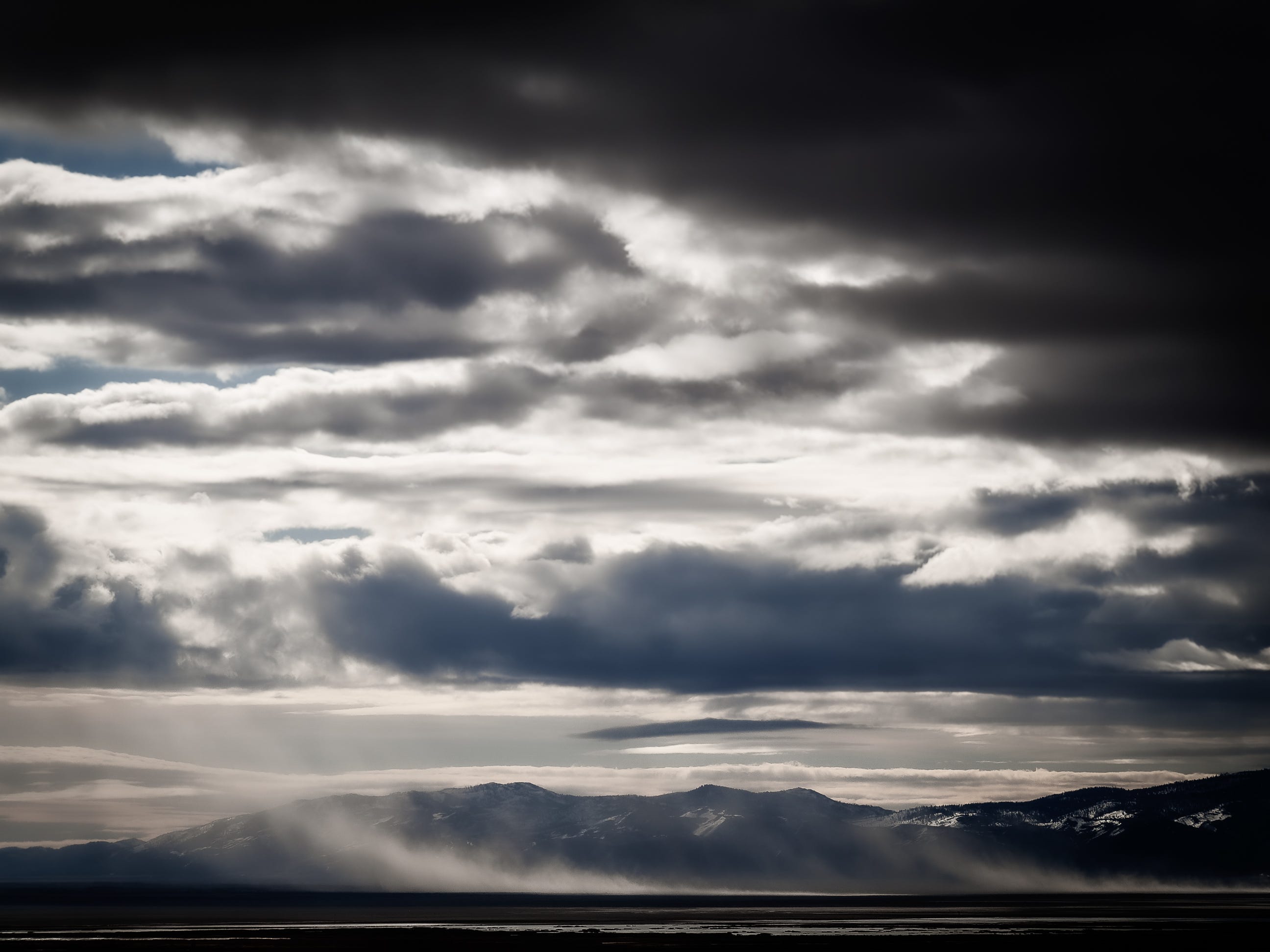
The snow has not come as predicted. Forecasts in this place are often wrong. The mountains and the winds defy the oracles at the National Weather Service. The dark clouds come in over the peaks and the villagers look up. They cry for snow. In the Havamal Odin warned against looking up in the middle of battle. Looking up, he said, invited madness. To peak over the shield, which had been blessed to provide protection, was always dangerous. And so it is in this village against the mountain peaks. Looking up, too long, invites madness.
In place of snow, the rain. A fever of rain on the last night of January. I sleep with the window open for the air and the noises from the night forest. Owls. Coyotes. Sometimes lions, who can chirp like birds and suck the air out of a forest. Creatures fighting for their lives in the dark with stillness. Not even breathing. But last night it was only an open window and rain on the roof in a deep void of darkness and dripping trees.
Which is what the astronomers tell us the universe was, once, before some infinitesimal fluctuation of particles created the Big Bang. A void. The void was not nothing, which is something different. Rather, it was a void containing everything required to make a universe. This is hard to understand but the void was not our concept of zero, which when multiplied annihilates everything it touches. Zero is chaos, which terrified the Greeks. The void is, according to the particle physicist Guido Tonelli, “not a philosophical concept, it is a particular material system, one in which matter and energy are null. It is a state of zero energy, but it is a physical system like all others that can be investigated, measured, and characterized.”
Call it sleep. A state of zero energy, filled with dragons and bears and archers and shooting stars, dreams of falling, and synapsis brushing the absurd. It is not nothing. Tonelli wrote: “We have known for some time now that the stars tell their stories in a much richer and more eloquent language than had previously been imagined.”
