
Lights and Sirens
Part 43 of A Policeman's Tale of the American Riviera

“The heart of man is deceitful above all else, and desperately wicked; who can understand it?”
~Jeremiah 17:9
Birds Are Real
Long after you retire, after you transit back through the invisible barrier between being a policeman—and all that comes with it—into civilian life, you will enjoy spring mornings on the porch at your mountain redoubt, far away from the madding crowd, sipping a cup of tea and absently scratching your dog’s ears while the birds sing in the ponderosas. The birds—bluebirds, redwing blackbirds, and hummingbirds—spend their winters in Mexico, nesting among the superlabs and the poppy fields, and as an old campaigner—knowing what you know—it can be a struggle to keep your mind from losing the plot. You marvel at how quickly you can drift from birdwatching to superlabs and poppy fields, turning a good vision against itself while your soul battles the current to get the ship back on its proper course.
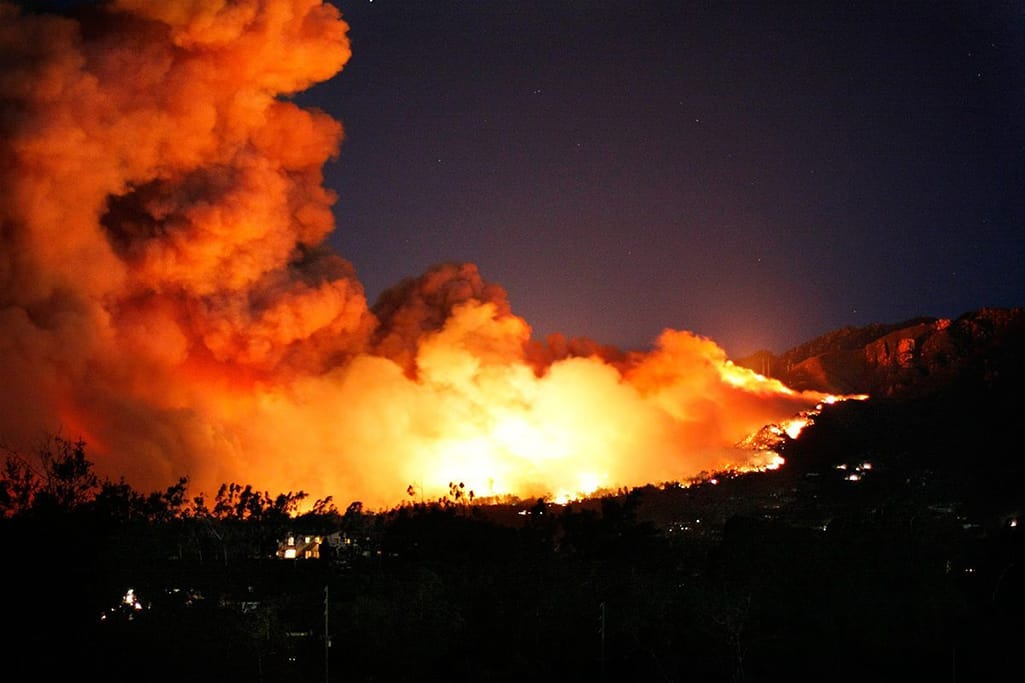
This is the curse of old cops. The birds are blameless. They are just birds. But random visions and wandering thoughts can flip the switch—from the incredible migration of delicate birds up the Pacific Flyway to memories of the streets—of a goofy and unfounded alarm call when you were entangled in the massive web of an orchard spider in the dark, of a deranged old man answering the knock on his door with a gun during a Check the Welfare, or of the Tea Fire, where you patrolled through the evil smoke and the flying embers and tried to keep the relentless flood of looters and phony contractors from heaping injustice on top of misfortune.
You sit with it all for a while, sipping your tea, and then you realize what happened: the spring birds in the trees, recently arrived from Mexico, resurrected a memory of the charred birds dead on the ashy sidewalks of Mountain Drive.
And so it goes.
210 houses burned to the ground in the Tea Fire, and of course you remember the notifications, where you manned a roadblock barricade to keep the lookey-loos and the creeping shitheads out, where distraught homeowners would assemble and beg you to check on their house, to see if it was still standing. And if you had time, if you could catch a break from turning away the indignant and entitled liars who drove up to the barricade claiming the Chief of Police had given them a dispensation to return to their homes—and when that didn’t work, claiming they had left their medications behind and they would die without them—you would check on houses for the huddled masses. You would drive through the swirling ash and the melted street signs, among the fire apparatus and the lines of filthy hose, among the exhausted firemen and their grim visages, and find someone’s house gone down in a pile of smoking beams, the one house on that street that burned because fire in a dense neighborhood is an evil lottery. And when you return to the barricade they can see the verdict in your eyes, and so a woman slumps to her knees under the weight of her grief while, a mile away, on the other side of the world, the governor is holding a press conference in his full wildfire regalia and every civic official in the county is trying to worm their way on stage to stand in front of the cameras.
